




Design in the service of home fragrance
When aesthetics enhance the olfactory experience
The art of perfuming one's home is no longer limited to a simple diffusion of fragrances. Today, designer decorative objects (candles, scented bouquets, diffusers, etc.) seamlessly integrate into our living spaces. They have become key pieces of interior decoration, enhancing both aesthetics and sensory experience.

Many artists and designers have explored the alliance between design and olfaction through exhibitions and creations. For example, the exhibition "Breathe Art" highlighted the place of perfume in contemporary art. Some artists evoke the sensuality and fluidity of perfume through glass creations. The works were exhibited at the International Perfume Museum in Grasse.
Similarly, in London, the AVM Curiosities association has presented several exhibitions:
- Scenterpiece, imagined by British designer Tasha Marks, a multisensory installation that aims to be both a visual and olfactory feast, embodying the art of entertaining and the spectacle of eating and enjoying.

- Medieval Women, highlights women in the Middle Ages. For the occasion, the museum created fragrances inspired by a hair perfume, a manuscript from the period, and a comb. Moreover, 3D vessels were specially designed to house and enhance these perfumes.

Design in interior decoration: a vector of emotion and harmony
Shapes and materials for well-being
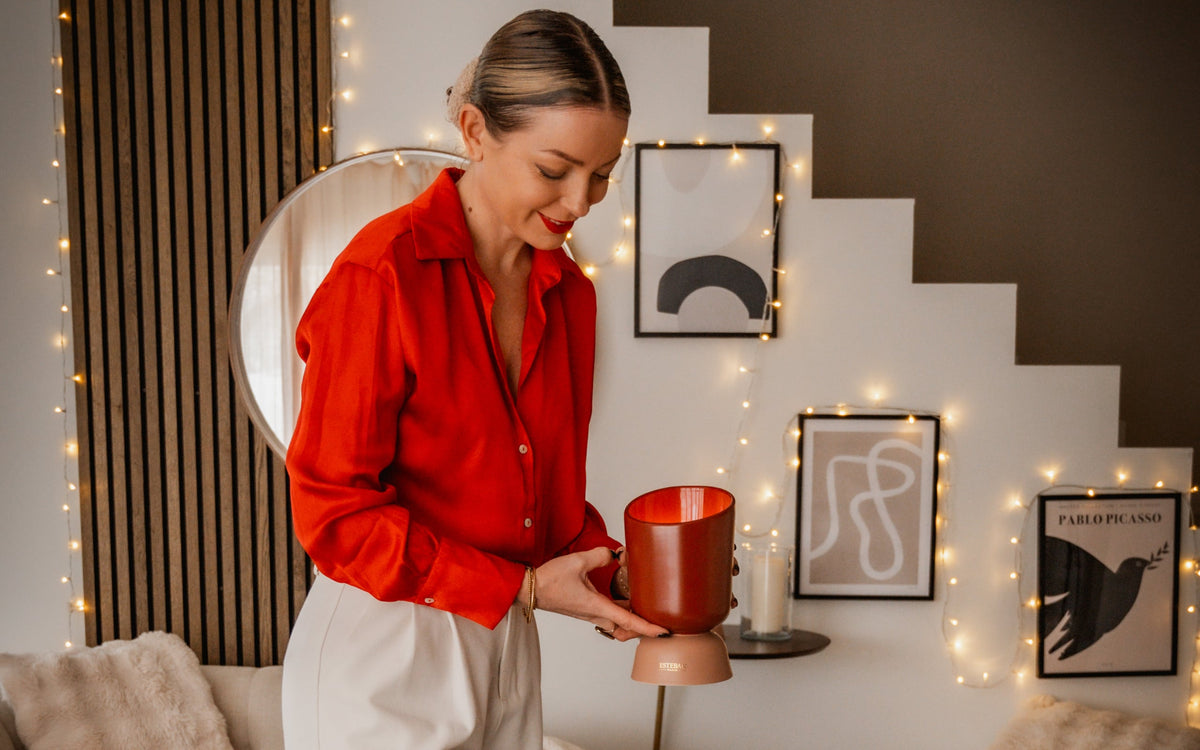
Interior design is much more than a simple matter of aesthetics. It influences our sensations and our perception of space. Current trends highlight soft and organic shapes. Consequently, we find them more and more in designer interior candles or artistic diffusers. For example, for the Iconic Color collection, the beveled and rounded shapes were designed to be at the heart of trends and to bring softness and fluidity. The pedestal, meanwhile, showcases the perfumer's know-how. In addition, noble materials such as glass and ceramic enhance our emblematic scents.

Curves bring a feeling of welcome and serenity, fostering a soft and enveloping atmosphere. This organic approach to design in decoration recalls the historical use of ceramics at Estéban Paris Parfums. 40 years ago, our brand introduced the art of perfuming ceramic objects. Today, this tradition continues. This is how the sensory experience is complete: the shape and material amplify the diffusion of fragrances.
Color your life with Iconic Color
The result of a collaboration between Estéban Paris Parfums and designer Tristan Lohner, this collection reinvents classic design codes with a contemporary approach. Each object, whether a candle or a scented bouquet, has been conceived as a true sensory sculpture, where material and color play a primordial role.
Tristan Lohner, a renowned designer trained at the Arts Décoratifs in Paris, awarded for numerous projects by the Étoile du Design and the Red Dot Design, is also deputy director of the RBC group. A proponent of accessible design, he is inspired by the purity of forms and the intimate relationship between the object and its user. The added value of this collection is to bring a product design process to objects that are very well known in their functions.
The creation process began with in-depth research into the forms and textures best suited to enhance the diffusion of scents. Inspired by current trends, Tristan Lohner focused on soft lines and noble materials such as glass and ceramic. The tinted glass, in particular, creates fascinating plays of transparency that magnify the flame of candles and the wicks of scented bouquets.

The 220g candle 
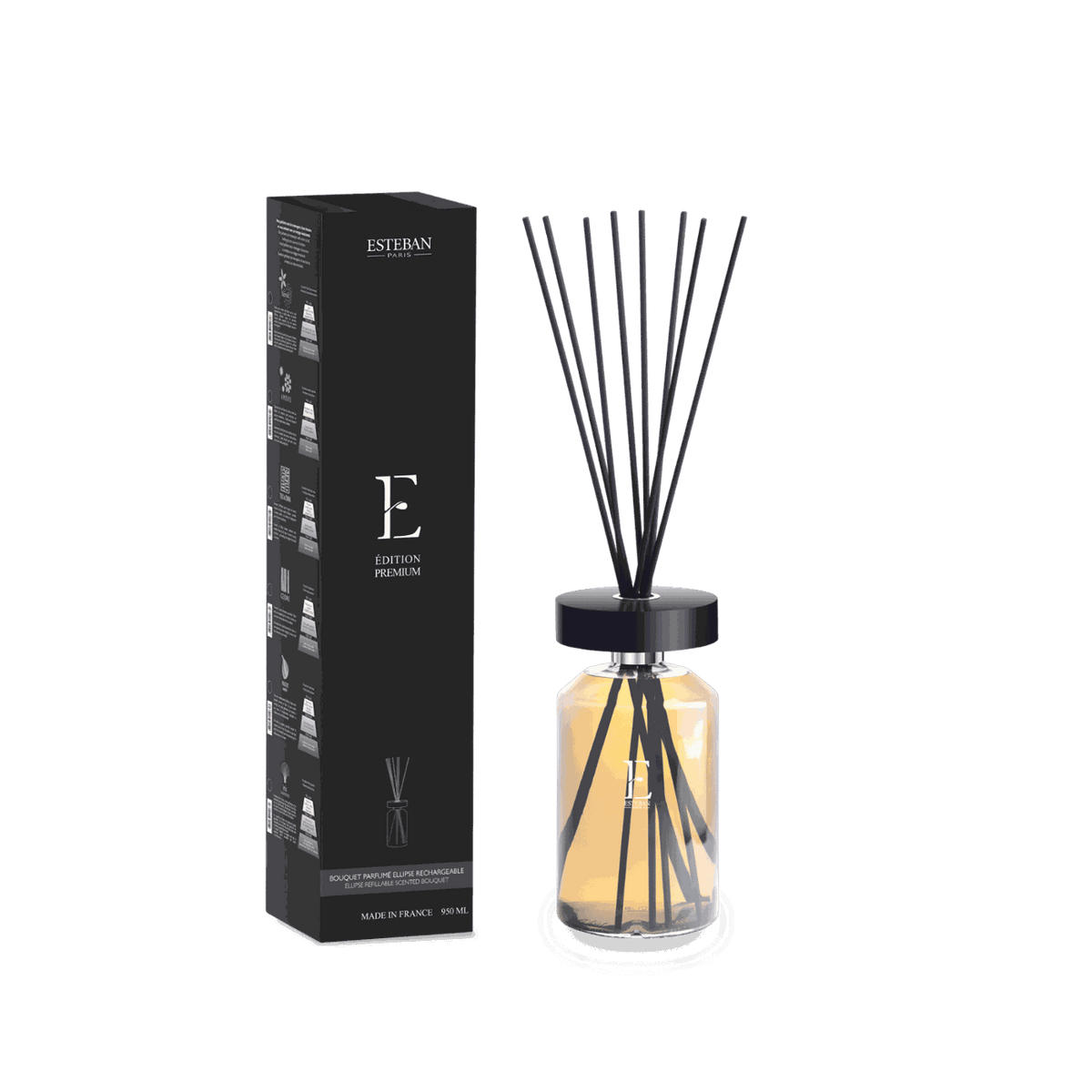
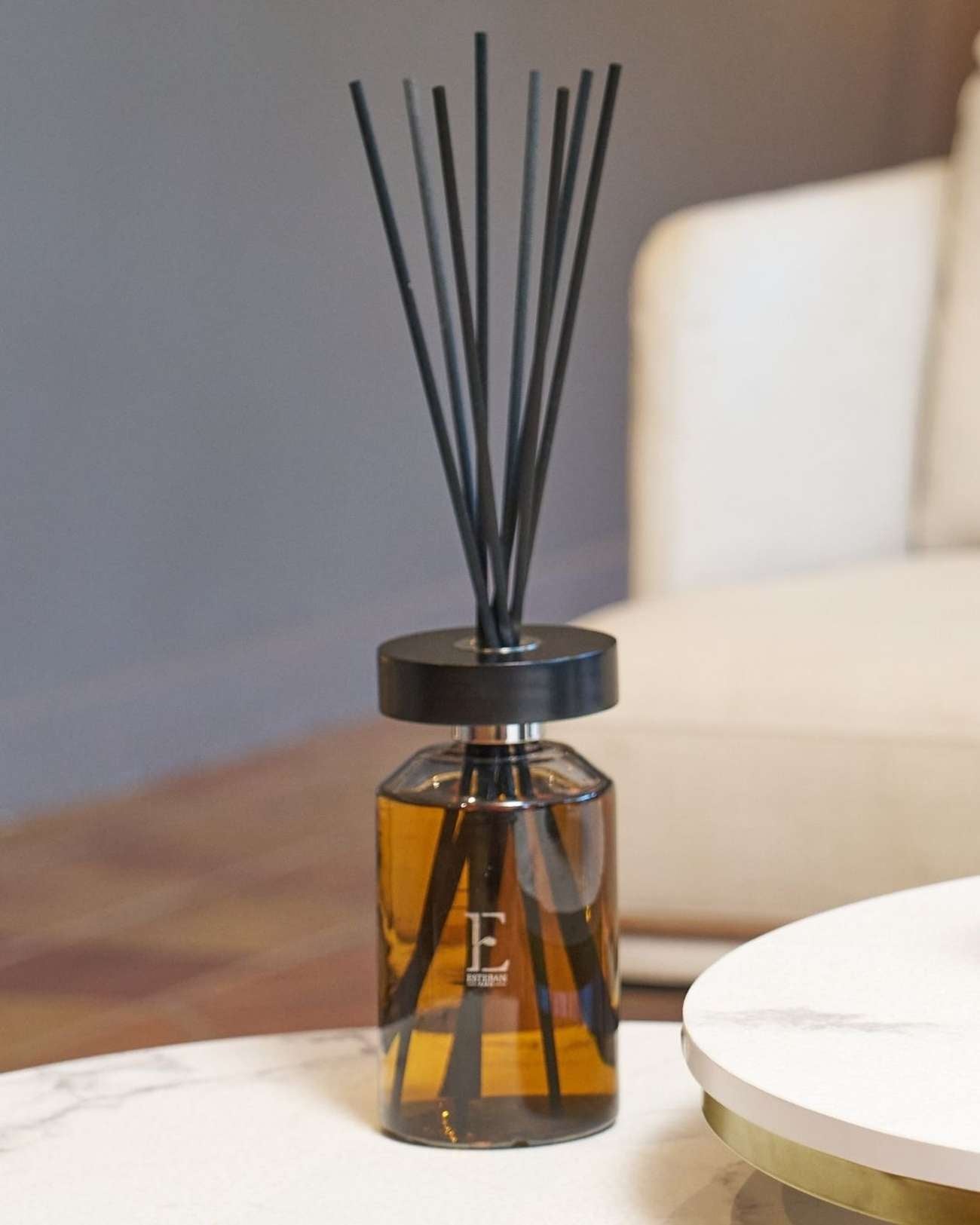
The scented bouquet 
The 700g candle
By offering refillable products, the ICONIC COLOR collection is also part of a committed CSR approach for nature. It is thus in line with the expectations of interior decoration and fragrance enthusiasts.

Similarly, glass is a noble and timeless material. It is also particularly appreciated for its elegance and its ability to play with light. This was notably the wish of French designer Tristan Lohner: to highlight the wicks and the perfume through the opacity of the glass. Thanks to these plays of transparency, he sublimates the fragrances while bringing a refined touch to interior decoration. Its use thus creates a harmonious balance between transparency, color and luminous reflections.

Colors and scents: a subtle interaction
Colors influence our perception and emotions. In Paris, Le Grand Musée du Parfum illustrated this very well. Artists explored the impact of hues on scents and olfactory design. For example, try to blindly taste a white wine, like a chardonnay, and a rosé wine. It will be difficult for you to distinguish them! The appearance of the color will influence your olfactory and gustatory perception.
A perfume enhanced by a designer case
A dialogue between perfume and design
The design of an object influences our olfactory perception. Indeed, a carefully designed candle or perfume diffuser, both in terms of materials and shapes, amplifies the sensory experience.
Some luxury houses and art galleries have even proposed collaborations where emblematic works inspire unique perfumes. This is how art integrates into the olfactory sphere. This is notably the case of the Louvre Museum, which collaborated with Officine Universelle Buly in 2019. 8 perfumes were created for 8 emblematic masterpieces. For example, the Venus de Milo was interpreted by Jean-Christophe Hérault (Maison IFF). His perfume unites the intensity of mandarin and the delicacy of jasmine.


Also, in a more experimental vein, artist Sissel Tolaas, a perfume expert and researcher, has been working for years on olfactory memory by integrating specific scents into her interactive artworks. Her projects explore the impact of odors on human emotions and behavior. This is the case with Smell Memory Kit, an "amulet" to be worn in a bag or as a necklace or bracelet, which invites us to reconstruct memories through fragrances.

Collaborations between designers and perfume brands
The link between designers and perfumers (for interior or personal use) continues to intensify, giving rise to prestigious collaborations. For example, Marc Newson collaborated with Louis Vuitton. Together, they created innovative designer perfume bottles for personal use, merging luxury and minimalism.

Similarly, Philippe Starck developed his own range of perfumes for himself. He explored the relationship between architecture and scents to design fragrances with complex and futuristic structures.

Also, the chic and glamorous collections of Jonathan Adler, a big name in interior design, are tinged with eclectic references: pop, artistic, and historical. They include candles and scented bouquets. They illustrate how design can enhance the olfactory experience by playing with proportions and textures.

Aesthetics and fragrance unite in unique creations, where material, form, and light play an essential role. Choosing scented objects with careful design means opting for an elegant and immersive ambiance, where every detail counts to transform the space into a true olfactory and visual cocoon.
Sources:
- https://www.journalduluxe.fr/fr/beaute/l-officine-universelle-buly-collabore-avec-le-musee-du-louvre
- https://www.avmcuriosities.com/medieval-women
- https://www.avmcuriosities.com/scenterpiece
- https://supersense.com/smell-memory-kit/
- https://fr.louisvuitton.com/fra-fr/histoires/flacon-dexception
- https://www.starck.fr/starck-paris-p3325
- https://jonathanadler.com/
- https://www.laculturebyrogers.com/post/odeurs-art
- https://www.museesdegrasse.com/evenement/respirer-alart-quand-lart-contemporain-sublime-lunivers-du-parfum
- https://www.design-obsession.fr/parfum-design/
- https://www.instagram.com/grandmuseeduparfum/?hl=fr


